Do Trees and Shade Mean Solar Is Out of the Question?
Do Trees and Shade Mean Solar Is Out of the Question?
If you have a lot of mature trees around your home, it’s easy to assume solar probably isn’t going to work. You look at the roof, look at the trees, and think: well, that was a short conversation. But shade and solar are rarely that simple. Trees can absolutely reduce solar production, and on some properties they can make a meaningful difference, but they are only one part of the shading picture. Neighbouring homes, rooflines, chimneys and other obstructions can all affect how much usable sunlight reaches different parts of your roof. What matters far more than simply having trees nearby is where the shade falls, when it happens, how much of the roof it affects, and how the system is designed around it.
Some shade is much more significant than others. A roof that gets a little shade early in the morning may still have excellent solar potential, while a roof that stays shaded through the middle of the day can be a much bigger challenge. That’s why the question isn’t simply whether your roof experiences shade, almost every roof does. The more useful question is how much sunlight reaches the best parts of your roof over the course of the year, and whether that’s enough to make solar worthwhile.
Not all shade is created equal
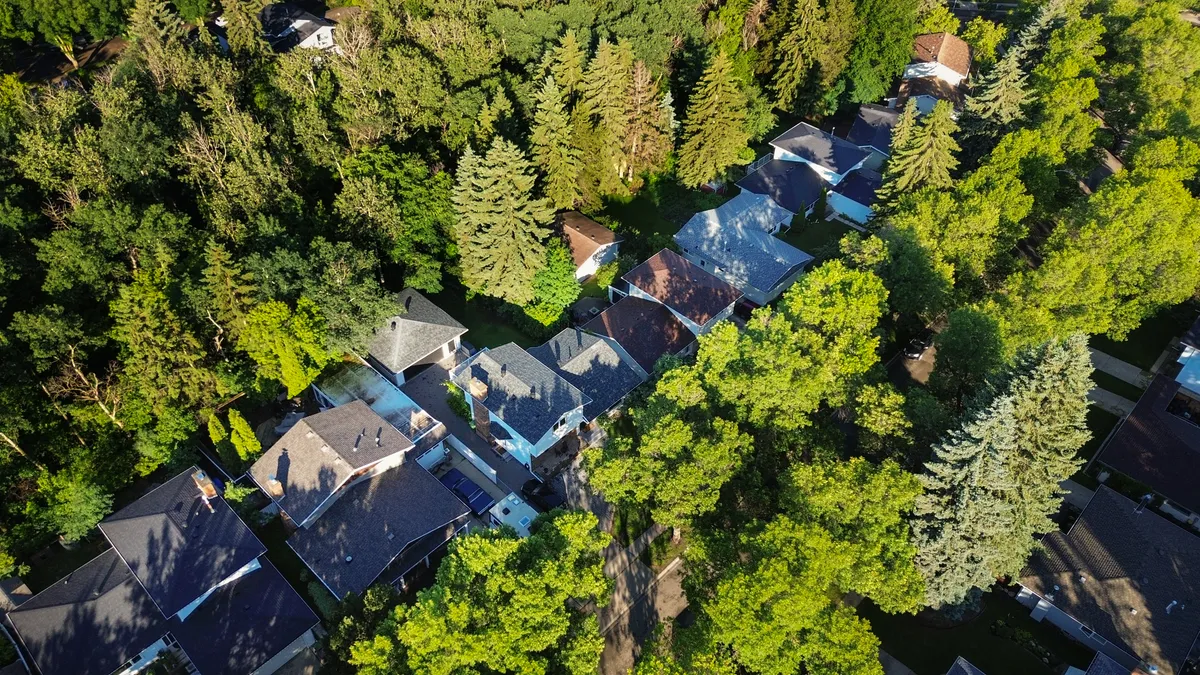
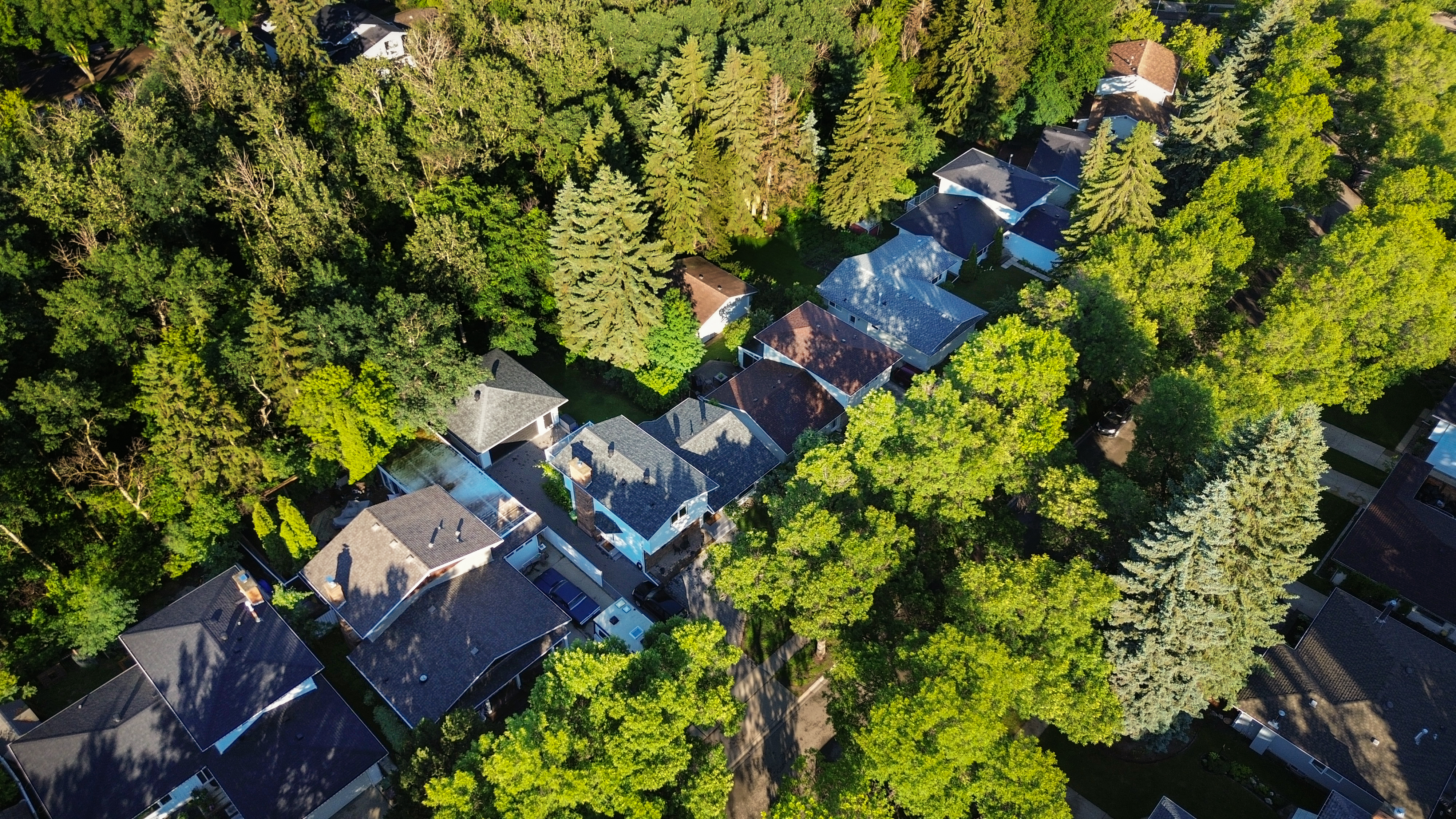
If you live in Braeside in St. Albert, you might look around at all those mature trees and think: how on earth is solar supposed to work here? It’s a fair question. Some streets are so heavily treed that, from the ground, solar can seem like a non-starter. But that’s also a good example of why judging a home from the street can be misleading. One roof may be heavily shaded through the middle of the day, while another just a few houses away may still have excellent solar exposure. One of the reasons homeowners sometimes rule themselves out too quickly is that shade is very visible. You can stand in the yard and physically see a shadow crossing the roof, but what you can’t easily see is how that shadow changes throughout the day, how quickly it moves, or what the same roof looks like three months later. A tree might affect the eastern side of the roof for an hour or two in the morning and have very little impact after that. Another might create shade late in the afternoon, once the strongest part of the solar production day has already passed. Neither situation is the same as having a large portion of the roof shaded through the middle of the day.
We’ve seen exactly this on one of our own solar projects in Braeside, St. Albert. From the ground, the mature trees surrounding the home make it look like the kind of place you might immediately rule out for solar. But once we modelled the roof, the surrounding trees and the annual sun exposure, it became clear that solar was still a viable option. The trees influenced the design and expected production, but they didn’t make the project a non-starter.
That doesn’t mean every heavily treed homes will get the same answer. It simply shows why the answer should come from the assessment, not the assumption.
Roof orientation plays into this too. One section may be partially shaded while another receives excellent exposure for most of the day. In that case, a good system design may simply concentrate panels on the stronger roof areas instead of trying to fill every available piece of space. Sometimes removing a few panels from a weaker roof plane can actually make more sense than squeezing in the largest system possible.
The goal isn’t to see how many panels can physically fit. It’s to determine which panels actually earn their place up there.
That is where good solar design starts to look less like a game of roof Tetris and more like an energy model. More panels are not automatically better if some of them spend a large portion of the day underneath a tree, and an inaccurate roof or shading model can make a system look better on paper than it will perform in the real world.
Designing around shade
Shade matters, but so does the way a solar system is designed to respond to it. This is also one of the reasons we use and recommend microinverter based solar systems. With a microinverter on each panel, every panel can operate more independently. If one part of the array is shaded, the panels in full sun can continue producing based on the light they are receiving. Microinverters do not make shade disappear. Unfortunately, we still have not found the setting that makes sunlight travel through a 40 foot spruce, but they do give us more flexibility when designing around real roofs where shade rarely falls evenly across the entire array.
Panel placement is just as important. If one roof plane is significantly better than another, it may make sense to build the system around that stronger area. In other cases, a tree may cast a dramatic looking shadow but only affect a relatively small portion of annual production. This is why two homes with similar looking tree cover can end up with very different solar recommendations. The answer depends on the actual property, not simply the number of trees you can see from the driveway.
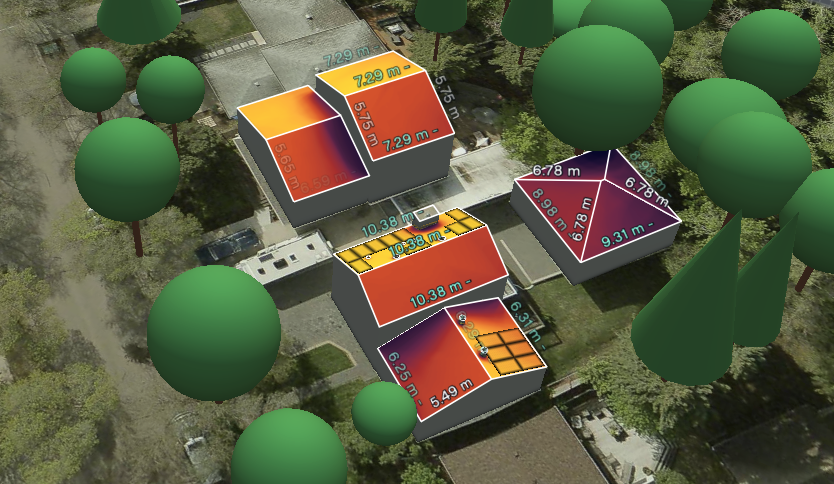
That is also why we do not want to make these decisions by eye alone. A satellite image can tell you quite a bit about a property, but it does not tell you everything. Detailed solar modelling allows us to look at the roof alongside surrounding trees, neighbouring buildings and other obstructions, and LiDAR data can help us understand the height and geometry of those objects far more accurately than a simple overhead image can.
That may sound like unnecessary detail until you see how much difference it can make. A neighbouring home that is taller than expected can introduce additional shade. Roof pitch can affect how well a surface performs. A tree may heavily affect one portion of a roof while leaving another almost untouched. Even the physical roof design matters, because the usable space needs to account for vents, setbacks and other obstructions before a panel layout is considered realistic.
The point of all this is not to create the most impressive production number possible. It is to build a model that reflects the real property as closely as we can, because a system that looks excellent on a screen is not particularly useful if the assumptions behind it are wrong.
Alberta changes the picture throughout the year
Shade patterns don’t stay the same all year, and in Alberta that can be especially noticeable. During winter, the sun sits much lower in the sky, so trees, neighbouring homes, chimneys and other obstructions cast much longer shadows than they do in June or July. If you’ve ever looked outside on a December afternoon and wondered why the entire backyard seems to have entered night mode at 2:30, you know what we are talking about!
That can make a shaded roof look particularly concerning in winter, but it needs context. Solar production is naturally much lower during the shortest winter days and considerably stronger during the long spring and summer days, so a shadow that looks dramatic in December may have a much smaller effect on annual production than you might expect. Looking at your roof on one particular afternoon therefore doesn’t tell us very much. A proper solar model looks at changing sun angles and estimates production over the course of the year rather than judging the property from one moment in time.
The type of tree can play a role too. Deciduous trees create different shading conditions once their leaves drop, while spruce, pine and other evergreens can affect sunlight throughout the year. Even then, location usually matters more than species. A large evergreen north of the house may have very little impact on the best roof surfaces. Put the same tree directly south of the roof and suddenly it becomes a much bigger part of the conversation.
Do the trees need to come down?
Usually, removing trees should not be the starting point. A mature tree has value of its own. It can provide privacy, summer shade, landscaping, wind protection and, apparently, a mandatory meeting place for every magpie in St. Albert. The first question should therefore be whether the solar system can work around it rather than whether the tree needs to disappear.
Sometimes selective trimming can meaningfully improve production. In other cases, trimming or removing a tree might provide such a small improvement that it simply isn’t worth doing. There are also situations where one particularly problematic tree is responsible for a significant amount of midday shading across the best part of the roof, and removing it could materially change the viability of the project. The important thing is that this should be a measured decision rather than an automatic one.
If removing a mature tree gains very little annual production, that may be a poor trade. If the difference is substantial, it becomes a different conversation. The production numbers should help make that decision, not the assumption that installing solar means clearing the yard.
Sometimes, the answer really is no
There is another side to this that is worth saying clearly: some homes genuinely are too shaded for solar to make sense. If most of the usable roof is heavily shaded during the strongest part of the day, there may not be enough production to justify the cost of the system. The same can be true if the only good sections of roof are too small, or if improving the solar exposure would mean removing mature trees the homeowner has no interest in losing.
That shouldn’t be treated as a failure of the solar assessment. It is actually the assessment doing its job.
A good solar assessment isn’t trying to find a way to put solar on every roof. It’s trying to determine whether solar makes sense for that particular home.
Sometimes the most useful recommendation really is:
“We wouldn’t put solar here.”
We would rather show you a realistic production estimate and tell you that solar probably doesn’t make sense than build a proposal around numbers we don’t believe in. A homeowner should be able to make the decision with a clear understanding of what the system is expected to produce, where the limitations are and why.
So, should trees stop you from looking into solar?
Probably not. If you have trees around your home, expect them to be part of the conversation. They may affect the size of the system, the panel layout, expected production or the overall economics of the project, but they do not automatically rule solar out. The best way to find out is to look at the actual roof, the surrounding trees and buildings, seasonal shade and expected annual production rather than trying to judge everything from the yard.
You may discover that the shade is far less significant than you thought. You may also discover that one part of the roof performs much better than another, and that a carefully designed system can work around what initially looked like a major limitation. And if the numbers show that the property simply isn’t a good fit, at least you know that before making a much bigger decision.
So, should trees stop you from looking into solar?
Trees, neighbouring homes and roof orientation can all be accounted for when we model your property, so you do not have to decide whether solar makes sense based on what the roof looks like from the driveway.
If you’re still in the early stages, you can start with our Solar Quiz or explore our Solar Price Guide to get a better feel for your options. If you want something more specific, we can take a closer look at the property, account for the surrounding shade and show you what a system could realistically produce.
That way, you can see the numbers before making any decisions. And if those numbers suggest solar isn’t worth it, we’ll tell you that too.
Prefer to speak directly to one of our experts?
Whether you want to book a solar consultation our team is here to help:
Give us a call: YEG (780) 203-8377 | CGY (403) 748-0100
Send us a email: [email protected]